
RDF Preparation · Process Guide
RDF Preparation: What Do Shredding, Sorting, Conveying and Briquetting Do?
RDF preparation can involve shredding, sorting, conveying and, in some projects, briquetting. Each stage has a different job. Start with the material you have and the condition the receiving facility needs before deciding which equipment belongs in your process.
On this page
At an RDF processing site, mixed material travels along conveyors into a shredder and emerges as smaller pieces. Some projects add sorting, further size reduction or compaction. To plan the equipment, it helps to understand what each operation changes and where the material will go next.
RDF stands for refuse-derived fuel: waste that has been treated to make it suitable for use as fuel. Suitability depends on the receiving facility’s requirements. Shredded or compacted material cannot be judged suitable from its appearance alone. The UK Environment Agency’s RDF guidance makes this connection to the receiving specification explicit.
Understand the role of each stage
The sequence below illustrates how the operations can connect. Conveyors serve several interfaces, while moisture control, blending and quality checks are arranged around the project. Stages may be added, combined or reordered.
Illustrative process sequence
- Feed inspection & pre-sorting
Define the incoming stream and separate unsuitable items.
- Primary shredding, if needed
Reduce bulky feed for the next treatment stage.
- Sorting & contaminant removal
Separate fractions around the actual material and treatment target.
- Further sizing, if needed
Prepare material for the receiving equipment.
- Delivery in the required form
Supply loose material, or bale or briquette where required.
Conveying connects the stages. Moisture control and quality checks depend on the feed and receiving requirements. This is a process illustration, not a fixed equipment package.
Already-sorted packaging residues have a different starting point from untreated mixed waste containing substantial contaminants. A site with an existing primary shredder may only need a further sizing stage and the connections around it.
- Shredding changes material size and shape.
- Sorting separates fractions and targets unwanted components.
- Conveying transfers material between equipment and matches their interfaces.
- Baling or briquetting provides a form suited to particular delivery, handling or use requirements.
ON-SITE FOOTAGE
RDF Preparation in Action
Follow the material from feeding and shredding to conveying and optional briquetting in this one-minute process overview.
Inspect and pre-sort the incoming feed
“Packaging waste,” “textile waste” and “mixed solid waste” identify broad categories. They do not provide enough information to choose equipment. Feed may be loose or baled, consist of short offcuts or long fabric strips, and include bulky wood pieces or metal contamination.
Describe the main fractions, largest items, bale condition, previous treatment and variation between batches. Identify wet material, visible inert contaminants and unknown residues separately.
Pre-sorting directs unsuitable items away from the next equipment according to the site’s acceptance rules and identifies materials that can be recovered. Batteries, pressurized containers and items with hazardous residues need to be identified and isolated through feed management and pre-treatment. Ordinary shredding equipment should not be relied on to handle them.
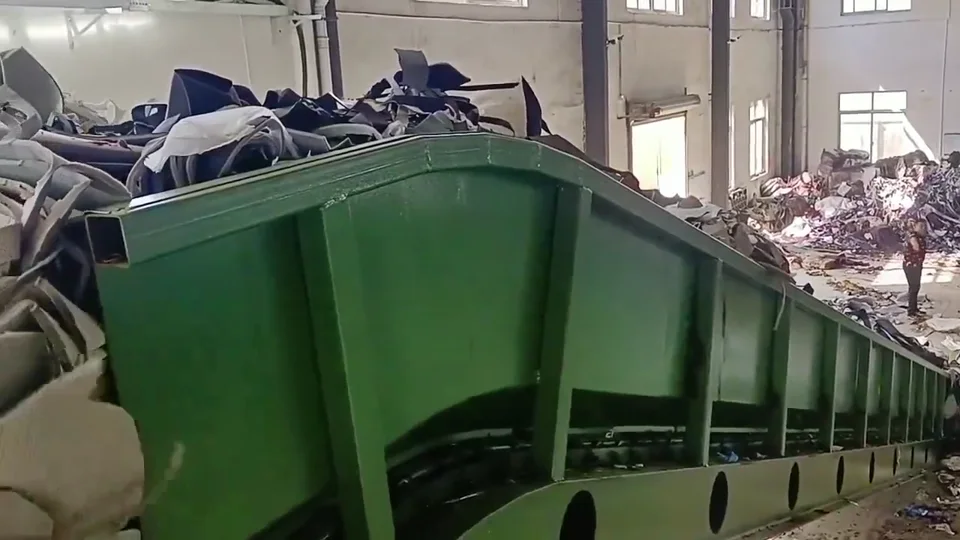
A distant photo of a stockpile rarely answers these questions. Add close-ups of the largest items, representative material spread out for inspection, and a short video of the loading method. These help define the feeding and cutting task.
Shred for the next process
Primary shredding usually addresses bulky, irregular or baled feed, reducing its size for conveying, sorting or further treatment. First establish the sizes and shapes the next machine can accept, then define how much reduction is needed.
Where prepared material still contains oversized fragments or long strips that interfere with the next stage, assess further sizing. Two shredding stages can have different duties: the first handles larger incoming material, while the second works toward a more specific discharge requirement.
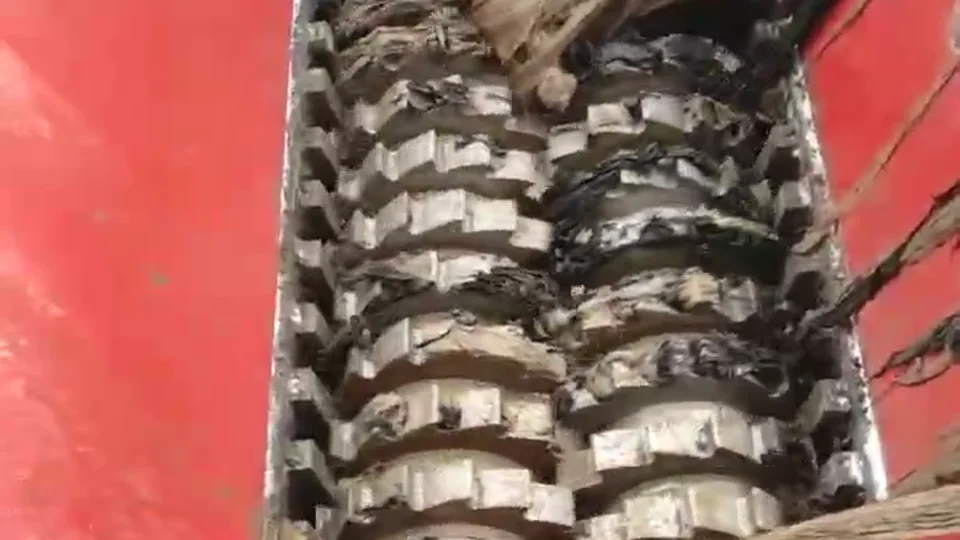
Within BoRay’s range, evaluate double shaft shredders for the primary reduction of bulky, irregular or mixed feed. Evaluate single shaft shredders for reasonably defined or prepared streams and further size control. The final selection depends on the feeding system, cutters, screen or discharge arrangement, and actual material.
The choice between one and two stages depends on the gap between the incoming feed and required output. An RDF project does not automatically require two shredders. Screen openings also do not define the maximum length of every fragment: irregular film and textile pieces need to be assessed using an agreed sampling and measurement method.
Compare the feed conditions, intermediate separation needs and output targets in our single-stage versus two-stage RDF shredding guide, with diagrams of both arrangements.
What must the material be ready for after this machine? This question gives equipment selection a more useful starting point than a general request to make everything as small as possible.
Sort contaminants and assess moisture
Reducing size does not automatically remove metal, glass or stones mixed into the feed. Sorting and contaminant removal must target what is actually present.
Screening separates size fractions. Magnetic separation targets ferromagnetic metals. Air classification uses differences in how materials behave in an air stream to separate some lighter and heavier fractions. Each operation has limits: one magnet does not remove every type of contaminant. These roles are illustrated in the RDF process description in India’s solid waste management manual.
Sorting need not all take place after shredding. Some items should be removed beforehand; other separations may be arranged after material has been opened up or reduced in size. For each separation stage, identify its target and where each resulting material stream will go.
Assess moisture separately. If the feed does not meet the conditions required by the next process or receiving facility, further shredding cannot substitute for drying. Whether drying is needed, and which method to use, depends on the feed, target moisture, available heat and operating costs. It is not a fixed requirement for every RDF project.
Sample and check the prepared material against the receiving requirements. A cleaner or more uniform appearance cannot replace quality testing.
Connect the equipment through conveying
A conveyor may appear as a simple line on a flow diagram, but its selection involves both the material and the equipment interfaces.
At the feed end, establish whether a loader or existing conveyor will supply the shredder, whether the material is loose or baled, and whether the drop point and available space suit the hopper. At discharge, confirm the position, height, receiving area and feed conditions of the next machine.

For light, flexible or irregular mixed material, a tonnes-per-hour figure alone is insufficient. Equal weights can occupy different volumes, and transfer points need to be checked against the material’s shape.
Review the upstream and downstream conveyor layout when assessing the shredder. For a retrofit, start with site photos and a sketch showing heights and directions, then confirm interface dimensions, control coordination and maintenance access.
An ordinary conveyor is not automatically a metering system. If the next process needs continuous, measured feeding, state this explicitly and confirm the feeding and control equipment required. See the feeding and conveying considerations on BoRay’s RDF application page.
Choose whether to bale or briquette
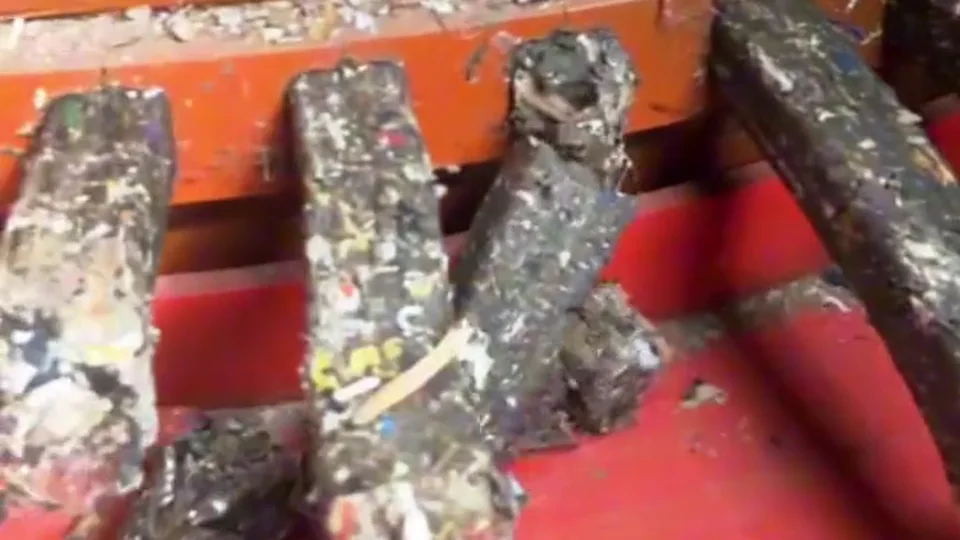
Briquetting is easy to recognize in site footage, but a block-like appearance does not define RDF. Whether to bale, briquette or use another forming process depends on transport, storage, handling and receiving equipment.
Baling typically gathers material into a package for handling. Briquetting compacts prepared material into blocks. These should also be distinguished from pelletizing. The US EPA’s densification study describes different compaction methods and their relationship to feed properties, handling and storage.
Before adding this stage, confirm:
- Does the receiving facility accept this delivery form?
- Will the material need debaling or further treatment before use?
- What feed size and moisture conditions does the forming equipment require?
- Does the extra operation fit the transport, unloading and storage arrangements?
Briquetting primarily changes physical form and bulk density. A denser block does not, by itself, establish a higher calorific value per kilogram or demonstrate the removal of chlorine or other unwanted components.
Confirm quality before fuel use
The end of the preparation route should match the receiving facility’s requirements. Material leaving a discharge conveyor has completed that transfer; its suitability as fuel still depends on the agreed quality checks.
Define the relevant requirements for size, shape, moisture, calorific value, chlorine, ash and any other applicable properties. Agree how to sample and test the material and handle nonconforming batches. Limits should come from the applicable requirements and receiving specification, rather than a supposedly universal RDF parameter table.
Environmental value also needs to be assessed across preparation and use. Properly prepared residual combustible material, used under controlled conditions, can support the substitution of conventional fuels. Material recycling priorities, quality control and emissions management remain important. Shredding or briquetting alone does not establish a project’s emissions savings. The GIZ/Holcim guidelines for waste pre-processing and cement co-processing explain this broader context.
Start with three pieces of information
You do not need a complete process specification before discussing equipment. Start with:
- Your current feed: main components, largest items, loose or baled condition, and visible contaminants.
- Treatment already completed: sorting, metal removal or primary shredding, and the current output.
- The next destination: the size, shape and feeding conditions required by the next equipment or fuel receiving facility.
BoRay supplies single shaft and double shaft shredders with supporting conveyors for RDF preparation and general solid waste size reduction. Feeding, cutting, discharge and equipment connections are assessed around your material. Sorting, drying, briquetting and final fuel use need to be defined separately within the project.
Send feed photos, a short site video and any receiving specification through WhatsApp or email. Add target throughput, working hours and site dimensions if known. Explore the RDF shredder and conveyor configurations, then discuss the task your equipment needs to perform.