
RDF Preparation · Equipment Planning
Single-Stage or Two-Stage RDF Shredding? Start with the Feed and Required Output
One shredding stage may be sufficient when the selected machine can handle the feed and deliver acceptable output at the required sustained rate. Compare two stages when primary reduction, intermediate separation and further sizing need distinct duties.

On this page
When selecting shredders for RDF preparation, you may encounter two approaches: achieve the required size reduction in one stage, or use primary shredding followed by further sizing. Both can have suitable applications. The decision starts with the job each machine must perform.
Consider the incoming material, the next process and the required sustained output together. If one stage meets the agreed conditions, evaluate that arrangement. If bulky feed handling, intermediate contaminant removal and final size control need separate duties, compare a two-stage route.
For the wider process, including sorting, conveying and optional compaction, read our RDF preparation process guide. This article focuses on choosing the number of shredding stages.
What counts as a shredding stage?
A stage here means a distinct size-reduction duty along the material’s treatment route. A single-stage arrangement can still require inspection, sorting, metal removal, conveying, moisture adjustment and quality checks before or after the shredder.
One stage does not necessarily mean one cutting action. In a machine with screen-controlled discharge, material may remain in the chamber for repeated cutting until it can pass through the screen. If an arrangement returns oversized material after external screening, account for that recirculating load and processing time.
In two-stage shredding, a primary machine prepares the feed for a subsequent sizing duty, with separation between them where needed. Two machines working in parallel on separate streams do not constitute two sequential stages.
Both approaches exist in industry: Lindner’s Polaris documentation describes a dedicated single-stage application, while its SRF preparation route for main burners separates primary shredding, separation and secondary shredding. These illustrate different process arrangements; their machine performance and fuel specifications do not define BoRay equipment or every RDF project.
Compare the two process routes
Begin with the condition of your feed today and work toward what the next equipment must receive. In the diagrams, only the highlighted boxes count as shredding stages.
One shredding stage
Evaluate when one machine can bridge the gap between the actual feed and the next process.
- Inspected and prepared feed
Confirm composition, largest items and previous treatment.
- Shredding stage 1 Size reduction
Match feeding, cutting and discharge to the agreed task.
- Next process
Check output acceptance and sustained receiving conditions.
Two shredding stages
Compare when primary reduction and further sizing need separate duties.
- Inspected feed
Define the incoming material and unsuitable items.
- Shredding stage 1 Primary reduction
Prepare feed for intermediate treatment and the next shredder.
- Separation, as needed
Remove the targeted fractions before further sizing.
- Shredding stage 2 Further sizing
Work toward the agreed downstream size and shape requirements.
- Next process
Check output acceptance and sustained receiving conditions.
How to read these routes: orange boxes mark shredding stages; the dashed box is project-dependent separation. Conveying connects equipment. Inspection, sorting, moisture control and quality checks may be needed elsewhere in either route. These are illustrative arrangements, not complete equipment packages. BoRay supplies shredders and supporting conveyors.
Define the next process first
“We want to produce RDF” is not a complete output specification. Material may next enter sorting equipment, an existing secondary shredder, a briquetting machine or a fuel receiving facility. Each destination sets a different task for the current shredder.
- Before sorting: confirm acceptable feed size, shape and delivery conditions with the sorting equipment supplier.
- Before further shredding: confirm the next machine’s feed limits, including large pieces, long strips and contaminants.
- Before compaction or fuel delivery: obtain the forming equipment’s feed conditions or the receiving facility’s specification.
A size in millimetres needs a definition. Does it refer to a screen opening, a typical fragment, a maximum dimension or the size below which an agreed proportion must fall? State how long film or textile strips are assessed, how oversized pieces are handled, and how output is sampled and accepted.

Neither a screen opening nor double shaft cutter width should be treated as the maximum length of every discharged piece. Fuel suitability also depends on composition, moisture and other receiving requirements. Adding another shredder cannot automatically resolve those quality issues. The UK Environment Agency’s RDF guidance links fuel preparation to the receiving specification.
When to evaluate one stage
Evaluate one stage when the material is sufficiently understood and the candidate machine may meet feeding, size-reduction and sustained discharge requirements together. The following conditions help frame the assessment; they do not guarantee that a particular machine will be suitable.
The feed has been defined or prepared
Sorted packaging residues, production offcuts with a reasonably consistent composition, or pre-treated combustible fractions provide a clearer basis for selection. Describe what the preparation has actually achieved, rather than simply labelling the material “clean” or “sorted.”
The size and form suit the feeding system
Check ordinary material and the largest items against the mechanism that feeds the cutting zone. A bale fitting inside a hopper does not establish that it can be processed at the required rate.
The next process can accept the output
Verify output and sustained throughput with representative material and defined operating conditions. A few acceptable-looking fragments do not demonstrate that an entire batch meets the agreed specification.
Fewer interfaces may simplify the arrangement
A single-stage option is worth comparing where the site seeks a simpler layout. Calculate the actual equipment, conveying, space and operating requirements before claiming savings. One fewer main machine does not necessarily mean a lower total system cost.
Large feed does not automatically rule out one stage. Selection still depends on the particular machine’s feeding, cutting and discharge capabilities.
When to compare two stages
A two-stage proposal should explain what each stage contributes. Three situations are especially useful starting points.
Bulky feed and final sizing need different duties
If a candidate machine cannot suitably combine large-item handling with the required final size control, compare primary reduction followed by a machine selected for the prepared stream. Define the first machine’s output around intermediate treatment and the second machine’s input limits.
Separation is needed between shredding stages
Identify fractions that must be removed before the material reaches the secondary shredder. For example, UNTHA’s SR2000 documentation specifies pre-shredded, screened material with metal separation for that machine. This is a model-specific requirement, illustrating why the downstream machine’s actual feed conditions must be checked.
Existing primary output needs further reduction
For a retrofit, record the gap between current output and downstream acceptance. Is the problem oversized pieces, long strips, uneven feeding or contamination? Assess another sizing stage once the main gap has been identified as a size-reduction task.
Review interstage conveyors, transfer heights and feed controls together. A high discharge rate from the primary machine does not establish that the secondary machine can continuously accept it. Increasing upstream input will not necessarily increase acceptable output from the complete route.
Two stages do not automatically provide buffering or backup capacity. For machines in series, define how feeding stops when either stage stops, and whether separate buffering arrangements are required.
Stage count and shaft count differ
Single-stage and two-stage describe the process arrangement. Single shaft and double shaft describe machine structure. A two-stage route should not automatically be specified as a double shaft machine followed by a single shaft machine.
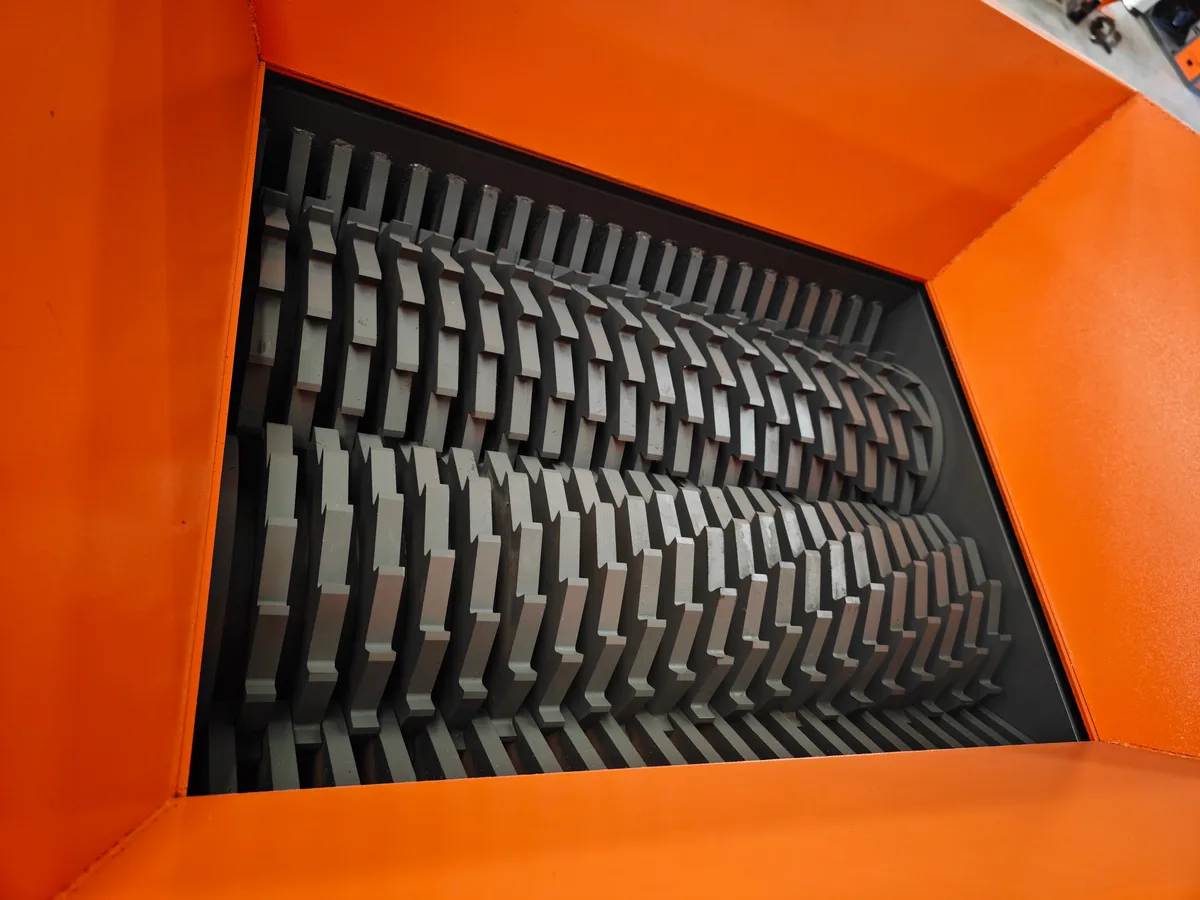
Within BoRay’s range, evaluate BRD and BRDS double shaft shredders for the primary reduction of bulky, irregular or mixed feed. Evaluate BRS and BRS-H single shaft shredders for reasonably defined streams suited to their feeding and screen-controlled discharge arrangements, including some further sizing duties.
Applications can overlap. Suitable baled materials may also be assessed for a single shaft machine with the appropriate feeding and chamber configuration. Whether a double shaft machine needs a downstream sizing stage depends on its actual output and the next process.
First define the task: handling and reducing incoming bulky material, or further processing a prepared stream. Then compare the chamber, feeding mechanism, cutters, screen or discharge arrangement, drive configuration and conveyor interfaces. Our single shaft versus double shaft selection guide explains the machine comparison in more detail.
Apply the decision to three feed scenarios
These are illustrative selection scenarios, not completed BoRay projects or performance commitments.
1. Packaging residues from a reasonably stable source
Assume composition is defined, major unwanted fractions have been separated upstream, and the next process has specified its feed requirements. Start by evaluating whether a suitable single stage can meet them. Check ordinary feed and representative large items at the required output condition. If both output acceptance and sustained rate are met, the RDF label alone is no reason to add a second stage.
2. Bulky and flexible mixed material needing further sizing
Assume incoming sizes vary substantially and some contaminants must be removed before secondary shredding. Compare primary reduction, project-specific separation and further sizing. The first stage prepares material for intermediate treatment and the next machine; the second works toward the agreed final size reduction. Specify acceptance conditions for both duties.
3. An existing primary system whose output causes downstream problems
Inspect the current output and receiving limits. If size or long strips are the main issue, evaluate additional sizing. If the main problem is a conveyor drop point, intermittent feeding or remaining contaminants, address that cause before deciding whether another shredder is necessary.
Compare acceptable output and operating conditions
Compare the routes using the same or representative feed, the same output target and a consistent operating-time basis. Motor nameplates or momentary input peaks cannot establish which arrangement suits the project.
Define the throughput boundary. State whether normal loading intervals, reversals and downtime are included. Account for oversized material returned for reprocessing. Distinguish incoming tonnes from tonnes meeting the agreed output conditions. If an intermediate stage removes metals or other fractions, upstream input and final output are not interchangeable figures.
Define the equipment included in operating costs. Rated motor power is not a measurement of actual energy consumption. Compare accumulated energy and corresponding tonnage over the same observation period, stating whether conveyors, sorting and other auxiliaries are included. Apply consistent boundaries to cutters, screens, maintenance labour and downtime.
Make any material trial representative. If a trial is arranged, include everyday material and representative difficult fractions. Record feed, configuration, output target, elapsed operating time and output samples. Check how the next equipment receives the material. A short demonstration that breaks a few pieces does not establish continuous production capacity.
Start with the current stream and receiving requirements
Send an overview of the feed, close-ups of the largest items and photos of any existing output. Explain which treatment steps are already complete and what is preventing the next process from receiving the material satisfactorily. Include receiving specifications, existing equipment details and a site layout where available.
BoRay can assess single shaft and double shaft shredders with supporting conveyors around your material and processing target, and compare one-stage or staged arrangements. Sorting, drying, briquetting and final fuel-use requirements need to be confirmed separately within the overall project.
You can start even if the final output size is not yet known: explain where the material will go. That interface helps define each machine’s duty before fixing the stage count. Explore our RDF and solid waste shredder configurations, or return to the complete RDF process overview.