BoRay industrial shredder equipment

BRS / BRS-H Single Shaft Shredder

Industrial Single Shaft Shredder Machine

Hydraulic feeding and screen-controlled discharge prepare material for the next process. Compare BoRay BRS standard and BRS-H heavy-duty machines for plastics, industrial paper, wood, fiber, cable, aluminum, and selected industrial waste.

Hydraulic feeding · Screen control · Standard and heavy-duty series

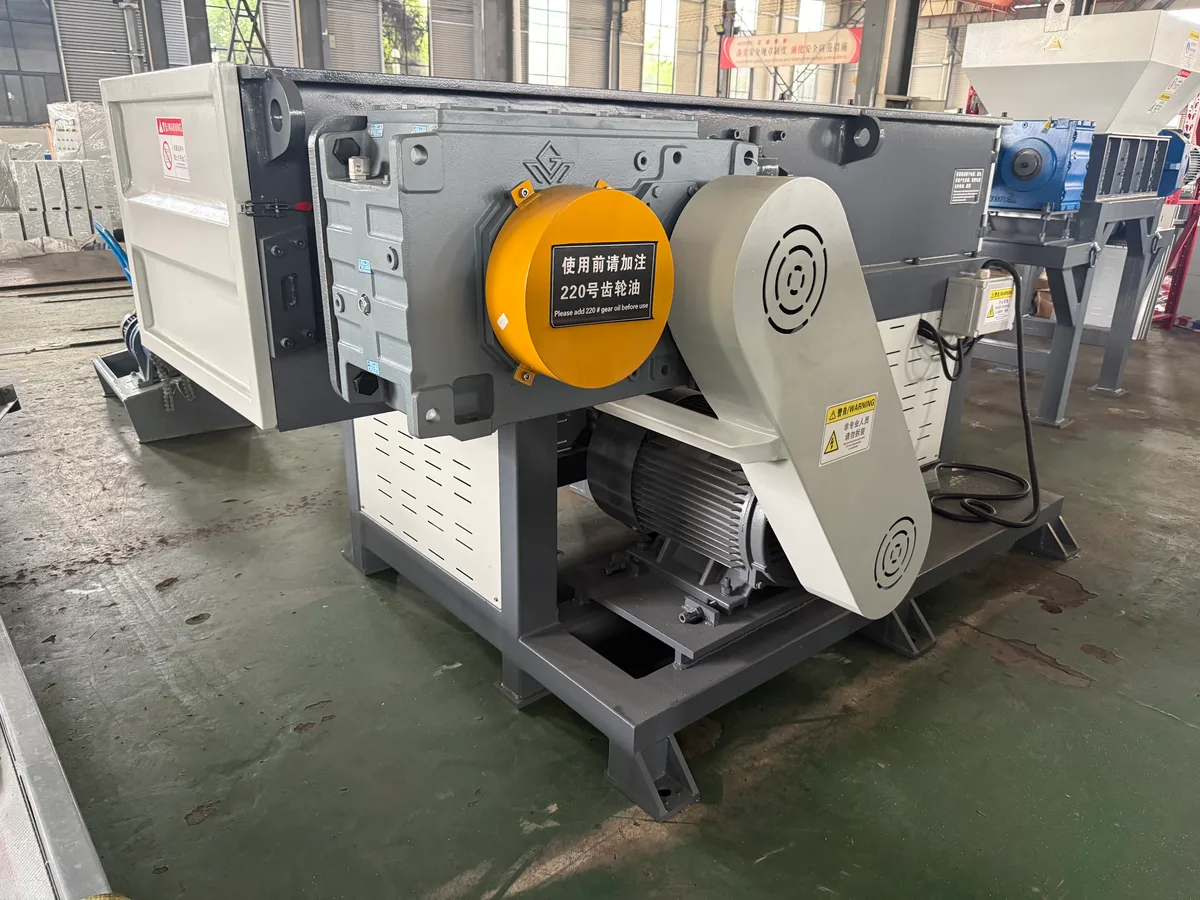
Real BRS single shaft shredder machine in BoRay workshop

How It Works

How material moves through a single shaft shredder

The pusher feeds material toward the rotating knives. The rotor cuts it, while the screen retains larger pieces for further processing. Material that passes through the selected openings is discharged for the next stage.

This arrangement suits projects that need both feeding control and sized discharge before washing, granulation, conveying, or recovery.

For bulky hollow products or mixed oversized waste where primary volume reduction comes first, compare the grabbing and pre-shredding action of a double shaft machine. View Double Shaft Shredders →

Machine Selection

Compare BRS and BRS-H

Compare the feed form, chamber space, and feeding arrangement before narrowing the model by discharge requirements and operating duty.

BRS Single Shaft Shredder machine

Standard configuration

BRS Single Shaft Shredder

For regular production scrap and medium or smaller feed, including plastic lumps, purgings, wood, industrial paper, and suitable cable or aluminum streams. Hydraulic feeding and a screen work together to bring material to the rotor and control discharge. Start with feed dimensions, target output, and available space.

  • Plastic production scrap
  • Wood and paper recycling
  • Cable and aluminum materials
  • Screen-controlled output
  • Compact processing areas
BRS-H Heavy-Duty Single Shaft Shredder machine

Heavy-duty configuration

BRS-H Heavy-Duty Single Shaft Shredder

For larger feed, baled plastics or paper, and heavier industrial waste duties. A larger chamber and swing-arm pressing system provide space and a feeding arrangement for bulky or compressed material. Compare chamber, rotor, and drive options for the required throughput and operating hours.

  • Baled plastics or paper
  • Large industrial waste
  • RDF / SRF pre-processing
  • Higher throughput projects
  • Longer working hours
BRS and BRS-H series comparison
Selection factorBRS standardBRS-H heavy-duty
Main taskRegular production scrap and medium or smaller feedLarger feed, bales, and heavier processing duties
Feeding arrangementHydraulic pusherSwing-arm pressing system
Chamber and rotorModel choices for regular recycling dutiesLarger chamber and rotor options
Typical applicationsPlastic lumps, wood, industrial paper, cable, and aluminumBaled plastics or paper, bulky industrial waste, and suitable RDF/SRF preparation
Selection inputsFeed dimensions, discharge target, capacity, and spaceFeed form, processing load, discharge target, and working hours

Core Structure

What the structure means in use

Feeding, knives, screen, and drive work together. Compare each feature with the task it needs to perform.

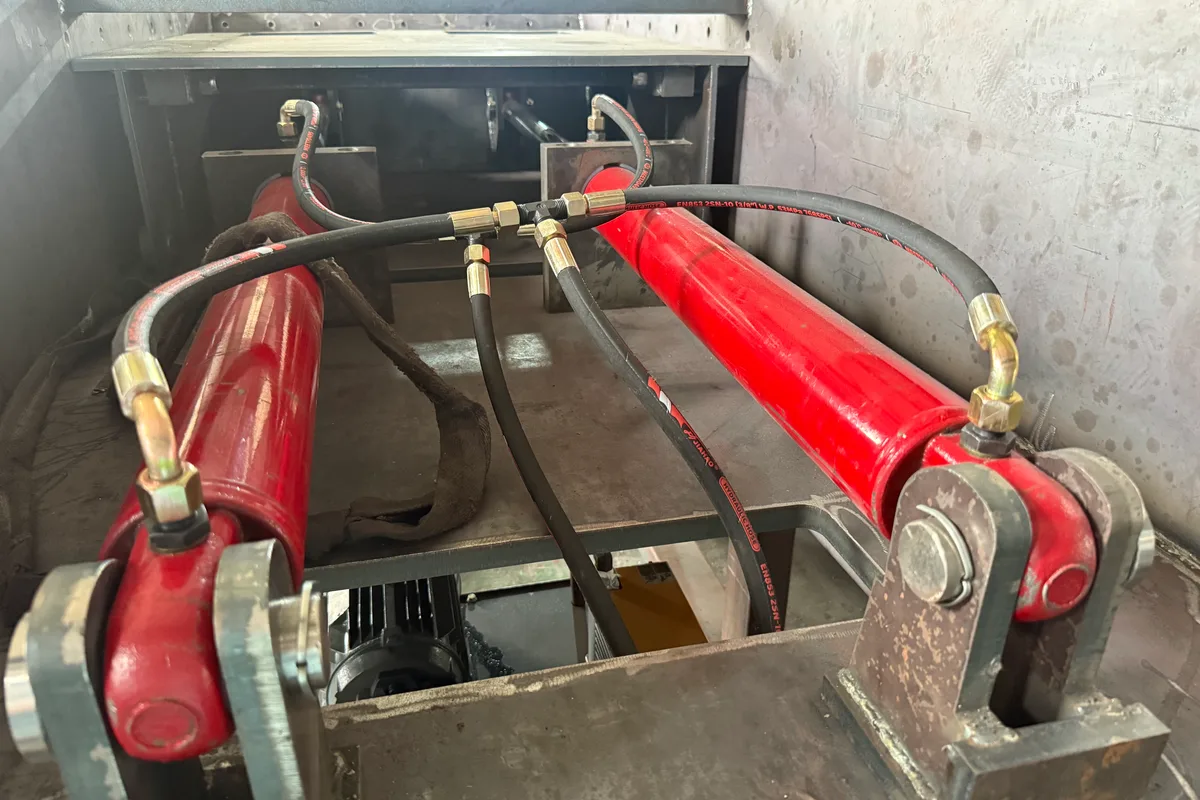
Single shaft shredder hydraulic pusher cylinder detail

Keep material in contact with the rotor

The hydraulic pusher brings larger or irregular pieces to the knives. The sloped BRS pusher design also helps reduce retained scrap in the feeding area.

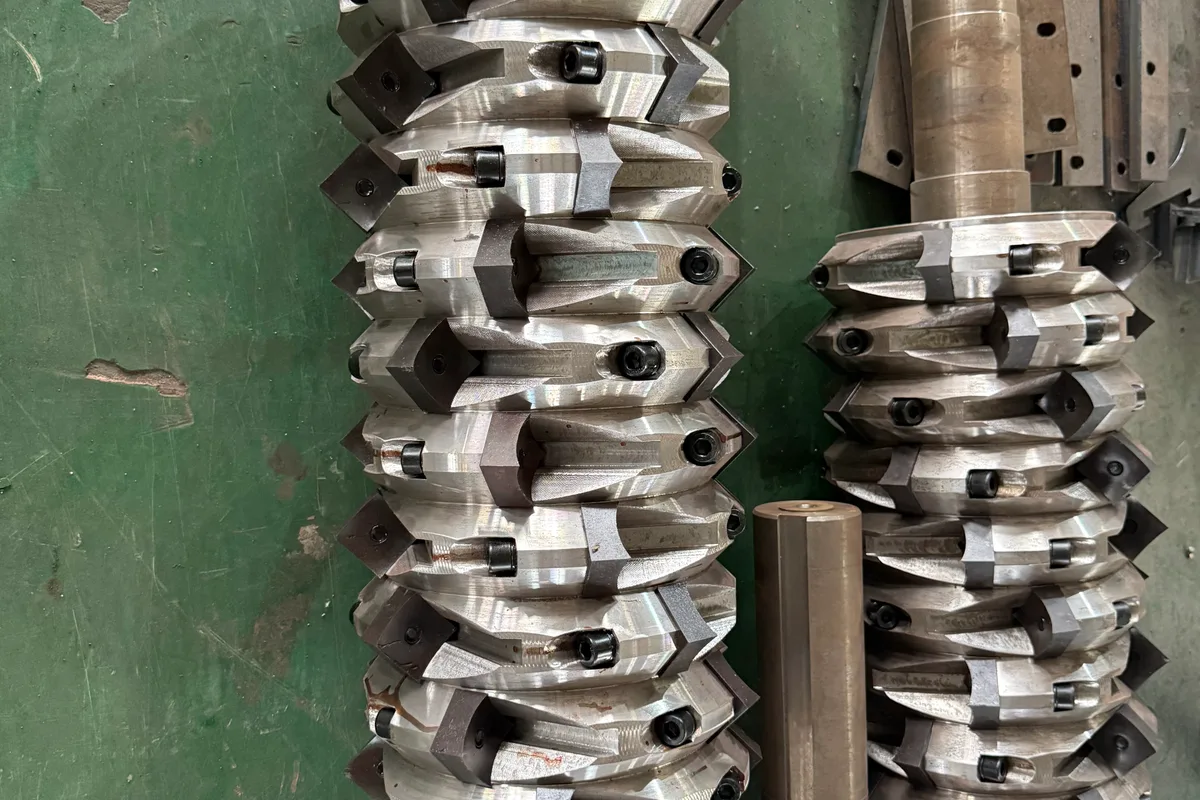
Single shaft shredder rotor knives with reusable cutter edges

Use all four cutting edges

BRS moving knives have four usable edges. As an edge wears, the knife can be indexed according to maintenance requirements before replacement. BRS-H cutter design is selected for the material and heavier operating duty.

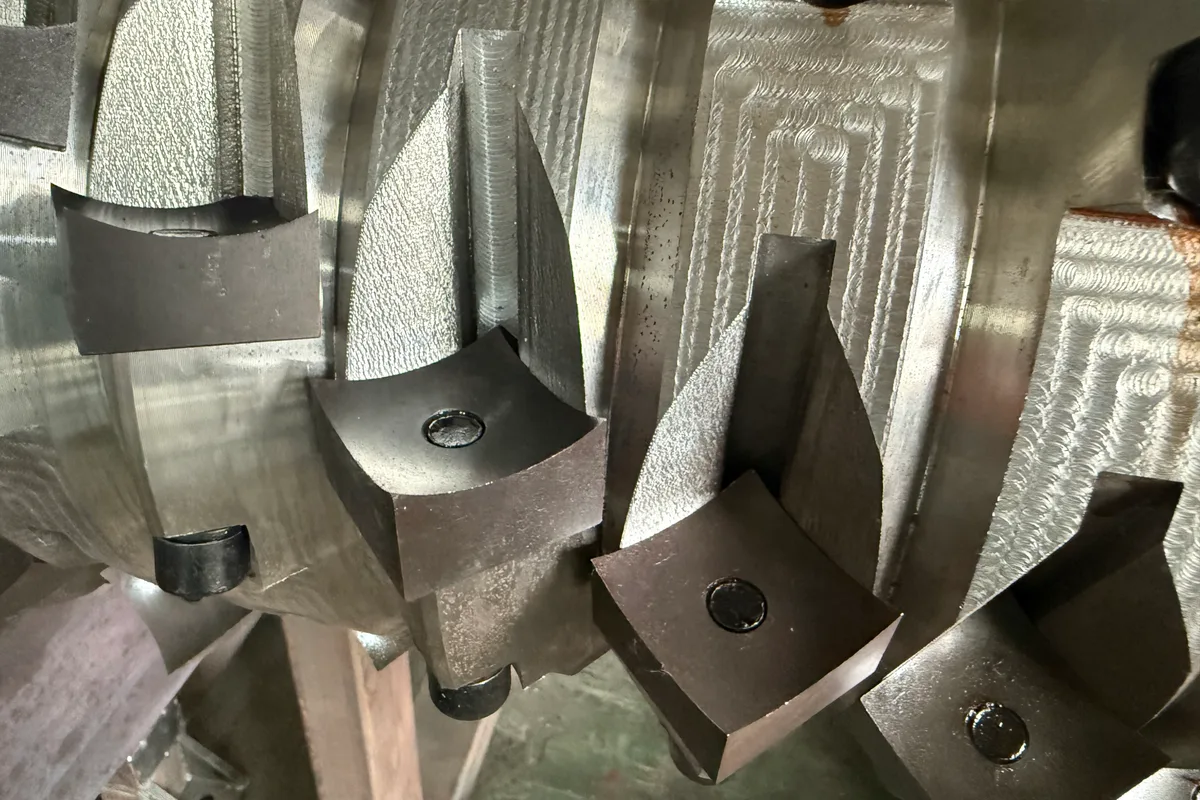
Single shaft shredder alloy cutter detail

Match knife material to the task

Standard BRS rotor knives use DC53 alloy steel for hardness and wear resistance. Heavy-duty knife materials are selected around the actual feed and operating load.

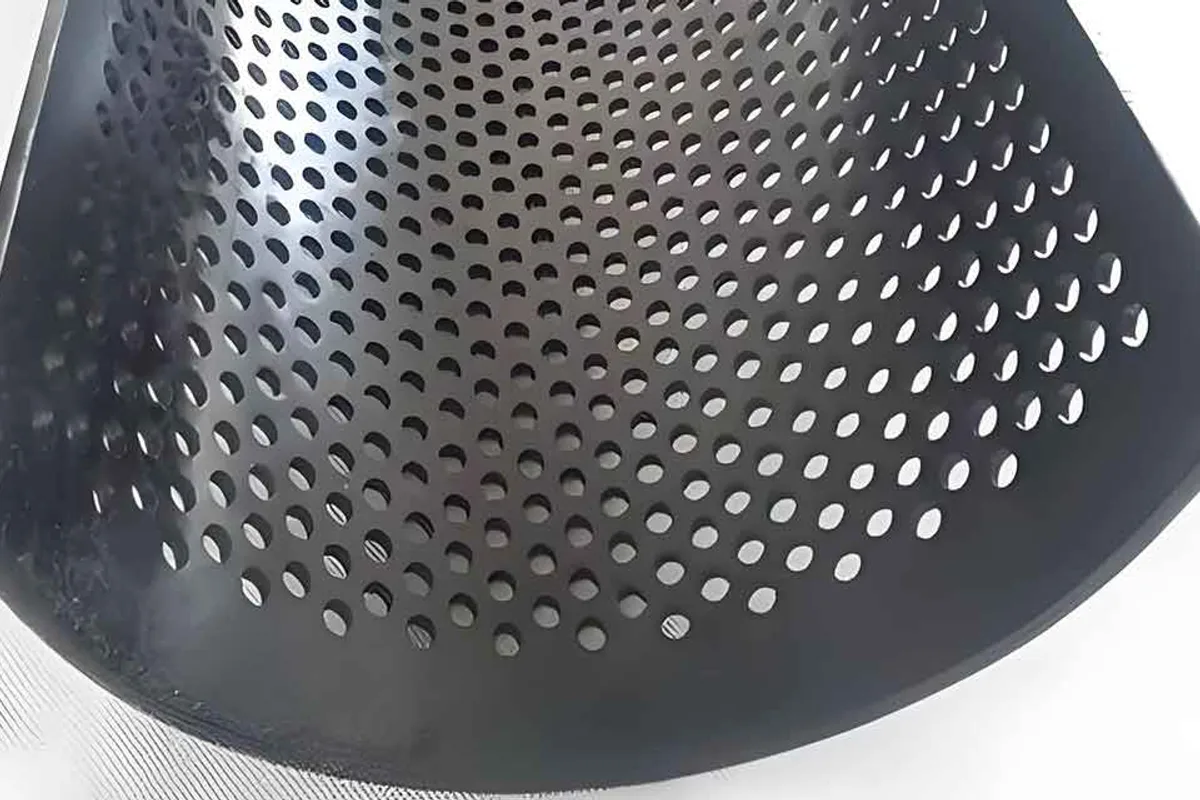
Single shaft shredder screen for output size control

Control discharge through the screen

Larger pieces remain in the chamber for further cutting. Round or hexagonal screen openings are selected for the material and the feed required by the next machine.

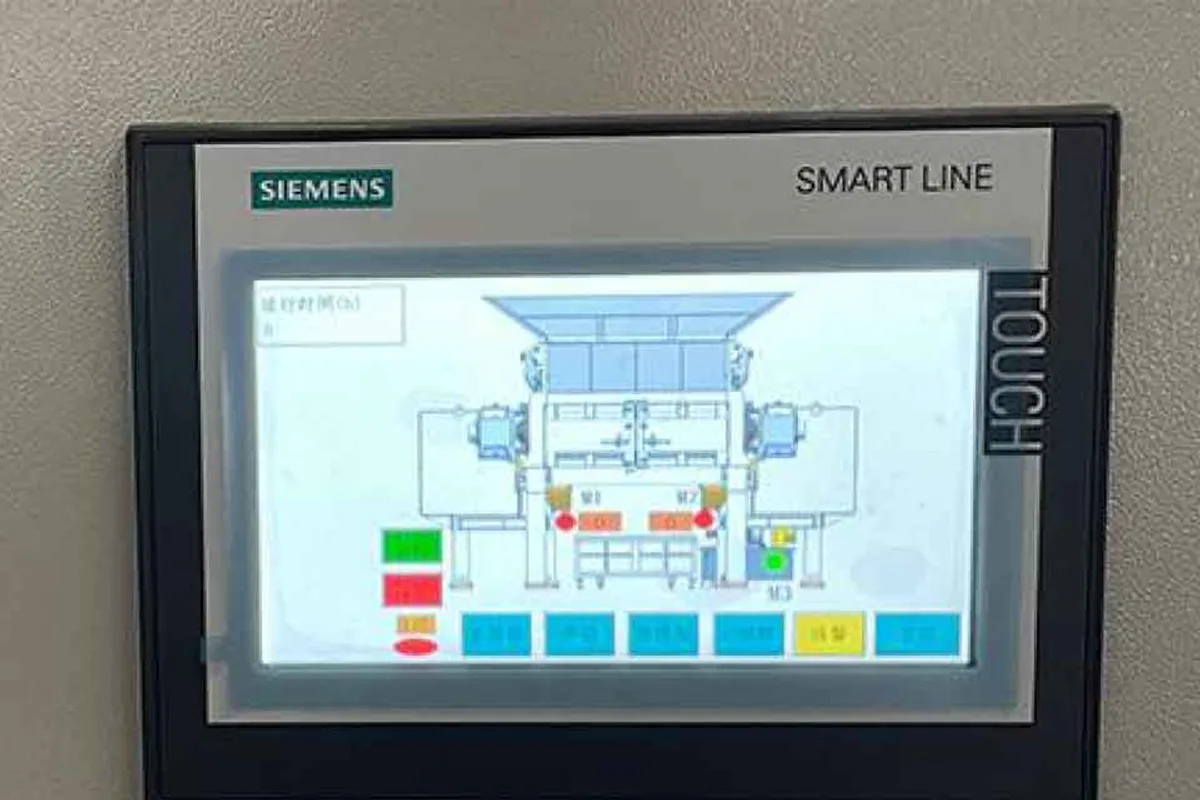
Single shaft shredder PLC control interface

Respond to uneven feeding loads

PLC overload protection and automatic reverse help release obstructed material and reduce manual intervention when loads change.

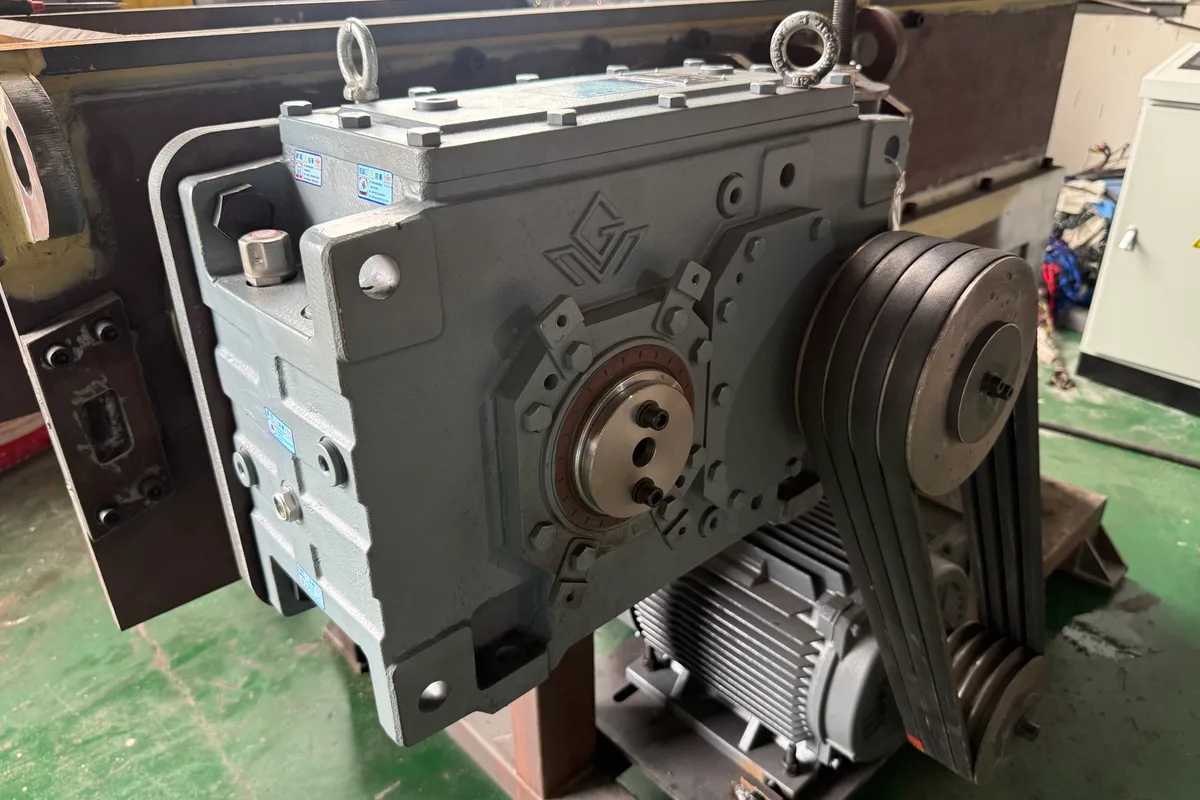
Single shaft shredder gearbox drive and belt transmission detail

Configure the drive for the working load

Motor, gearbox, and transmission deliver torque to the rotor together. Material load, required throughput, and operating hours guide the drive configuration.

Material Match

Find the application closest to your feed

The material name is a starting point. Its form and the next process help narrow the configuration.

Single shaft feed and selection priorities
Material groupTypical feedWhat to discuss
PlasticsLumps, purgings, pipes, products, film, and balesSolid or hollow; loose or baled; washing or granulation requirements.
Industrial paper and woodPaper rolls, cardboard, packaging, paper bales, and wood wasteFeed dimensions, feeding method, and the recycling process.
Fiber and textilesWoven materials, carpet, textile offcuts, sponge, and foamFeeding behavior and wrapping with flexible materials.
Cable and aluminumCable, aluminum cans, chips, and suitable production scrapComposition, feed form, and the downstream separation process.
Bales and industrial wasteLarge bales and selected bulky or mixed wasteChamber space, pressing arrangement, and processing load.

Explore plastic feed and machine selection, industrial paper applications, or metal recycling applications.

Not sure whether your material can be processed?

Describe your material and the result you need. Add dimensions or throughput if known; we can clarify the remaining details together.

Check My Material

Technical Parameters

Industrial Single Shaft Shredder Machine model specifications

Use chamber dimensions to narrow the model options for your feed, then discuss rotor, drive, and screen choices around the processing target. The tables show standard reference specifications; final configuration follows the material, discharge requirements, and site layout.

BRS Standard Single Shaft Shredder Parameters

For regular recycling streams and controlled output size. Final configuration can be adjusted according to material and output target.

Specification BRS-600BRS-800BRS-1200BRS-1400
Cutting chamber (mm) 500 x 580800 x 8501200 x 8501400 x 850
Rotor diameter (mm) 250400400400
Screen hole (mm) Dia. 40 customizableCustomizableCustomizableCustomizable
Power (kW) 18.5 + 1.537/45 + 3.7555 + 5.575 + 5.5
Overall size (mm) 1760 x 1300 x 18502850 x 1760 x 22102850 x 2560 x 23302850 x 2760 x 2330
Machine weight (kg) 2850415053005900

BRS-H Heavy-Duty Single Shaft Shredder Parameters

For larger chamber size, baled materials, heavy waste reduction, and higher-capacity industrial shredding operation.

Specification BRSH-1500BRSH-2000BRSH-2200BRSH-3000
Cutting chamber (mm) 1700 x 15001700 x 20001700 x 22001970 x 3000
Rotor diameter (mm) 460460600800
Screen hole (mm) Dia. 40 customizableCustomizableCustomizableCustomizable
Power (kW) 90 + 5.575 + 75 + 7.5132 + 132 + 11220 + 220 + 11
Overall size (mm) 2550 x 3750 x 27502550 x 4350 x 27502750 x 5640 x 29002850 x 6950 x 3700
Machine weight (kg) 13000155002100030000

Industrial Single Shaft Shredder Machine Quote

Start with your material and processing goal

Tell us what you process, its approximate dimensions, and the discharge you need. We will help compare BRS and BRS-H and clarify chamber, feeding, screen, and drive choices. You can start before all parameters are known.

Send photos or short videos through WhatsApp or email.

Useful details, if known

  • Material type and feed form
  • Approximate dimensions, if known
  • Required discharge or next process
  • Capacity and working hours, if known

Fields marked with * are required. Project details are optional; share what you know and we will help clarify the rest.

FAQ

Common questions about industrial single shaft shredder machine selection

Compare single shaft and double shaft shredders in our selection guide →

Choosing BRS or BRS-H for plastic lumps and thick-walled scrap →

How can I choose a machine before the output size is fixed? +

Tell us where the shredded material will go or what task it needs to serve. The feed requirements of an existing washing line, granulator, or conveying system help guide screen and discharge choices.

Does the same plastic need different configurations when loose or baled? +

The two forms should be compared. Baling changes dimensions and feeding behavior, which affect chamber space, pressing, and contact with the rotor. Describe the actual feed form as well as the plastic type.

How is knife wear handled? +

BRS moving knives can be indexed to use the remaining cutting edges. Maintenance follows the knife condition and machine requirements. BRS-H maintenance and replacement arrangements follow the selected cutter design.

Can the shredder connect to an existing line? +

Feeding, discharge, and control interfaces can be discussed around the existing line. Share the inlet and outlet positions of adjacent equipment, the processing task, and any known space limitations.